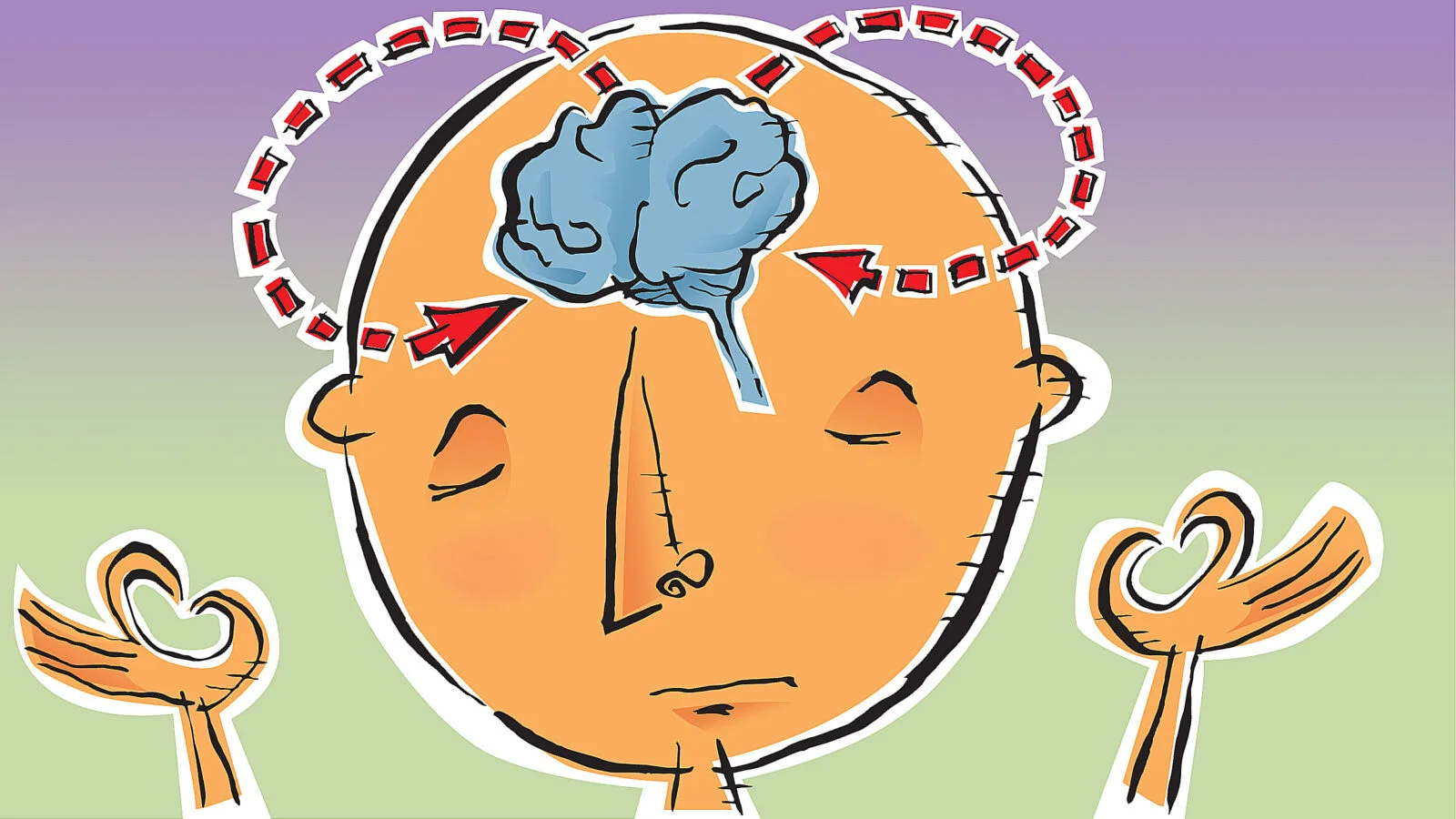


Outgrowing fear

Our heritage - picture courtesy Sharon Smith

When I was a child I loved those bedtime stories that my mother Elanora read to me.

Every evening she would kiss me on the cheeks and tuck me in. She pulled the blankets up tight and cozy around me. She smiled and asked what story I would like to hear. As she opened the book and began to read, her eyes glistened and spoke to me in gentle caresses of love.

Among my favorite Australian folk tales were Wayambeh the turtle and The origin of the Narran Lake. The stories seemed magical and filled with a life of hope.

But even though it scared me the best story was Deereeree the wagtail and the rainbow, mostly because it had a happy ending.

I was often frightened like Deereeree, of the long and dark silent night. And even when Bibbee created a beautiful rainbow to allay Deereeree’s fear of darkness, her suspicion of the event only prolonged the sense of fright. But in the end Bibbee explained his creation of love (the rainbow) and the two were married happily ever after.

My childhood was filled with the many challenges that we (the indigenous people) faced in Australia.

My mother reiterated how our people migrated from Southeast Asia into Australia approximately 50,000 years ago. Our numbers steadily grew to reach over 500 tribes (Bidjandjadjara, Aranda , Gunwinggu, Gurindji, Murngin, Kamilaroi, Tiwi, Wurora, Wailbri, and Yir-yoront). We were mostly nomads, moving from place to place in search of food. The men of the tribe hunted and protected the family, while the women cooked and tended to the children.

We were also artisans and philosophers, tied to the land, with a unique sensitivity and perspective of how nature functioned. We lived on the Earth, and its spirit flowed through our veins.

Our creation story calls the beginning of the world the “Dreaming,” or “Dreamtime.” Later in my life I learned that this was our recognition of the play of samsara (illusion), which causes and supports the false sense of ego and separateness. Even before the Buddha, my people understood the grand reality.

We do not consider the human species to be above or below that of rock, plant, or animal. We are part and parcel of nature’s song.

The didgeridoo

We created the “didgeridoo” bamboo wind instrument. At about five feet in length it produces a low, vibrating hum. We play this instrument at ceremonies honoring the events of sunrise, sunset, weddings and funerals.

Our way of life started to change significantly in 1788 when English settlers first landed in Australia. They took whatever land they wanted and their sheep farms began to multiply.

Many of my people became sick after contracted venereal disease, whooping cough, pneumonia, tuberculosis, and other illnesses due to exposure to the white man. And we were deemed by them as “uncivilized,” and they passed laws sanctioning the removal of children from their parents; to be placed in orphanages or put up for adoption.

When I was six years old the State stepped in to take me away from my mother.

But Sir Charles Wilson interceded on my behalf. Sir Charles was the 4th generation of Wilson’s that had settled in our glorious land. I was living with my father and mother on his ranch. When it converted over to a mining enterprise my father stayed on and worked the cooper processing mill. But he died from a machine accident.

Sir Charles Wilson kept me and my mother on and took us in as family. We developed a strong bond with him, his wife Martha, daughters Rebecca and Susan, and son Willy. He is a kind and gentle soul. Sir Charles formally adopted me, so that in the eyes of the State I was allowed to stay on at the ranch. I lived with my mother. I was lucky.

In 1960 the Maharishi visited Australia on his first world tour, and he was all the rage. The newspapers and radio shows pickup up on the story. Imagine that, a saint from the Himalayas coming down to the city and exclaiming that the nature of life was bliss. That seemed to challenge common sense. Was he for real? People wondered what planet he had been living on.

So my mother Elanora, who had always been interested in such things, took the bus to see him. Soon she learned Transcendental Meditation (TM). When recounting this story to me sometime later she said that when looking into the eyes of the Maharishi – she saw bliss, love, and contentment. He seemed to be a living example of what he taught. That’s what convinced her to start meditation.

Two years later when the Maharishi returned to Australia she went to see him again. But this time she took me. I didn’t understand a lot of what I heard, but it seemed to be a good thing. So that summer I learned the meditation also.

In the 1960’s the sentiment toward us, the indigenous people of Australia, started too changed. By 1967 the Australian people voted to make us citizens.

In the 1970’s our civil rights movement was born. We wanted equal rights and justice for the land that had been forcibly taken by British settlers.

I learned at an early age that love is wise and hatred is simply foolishness.

In the first years of meditation I enjoyed an ever increasing sense of calm and serenity. That was useful since my school exams took a toll on my nerves. At times I probably used it as a crutch; to calm me down before those State Exams and to help me better focus my attention when spending long hours at study.

(NAPLAN for Literacy and Numeracy, NAP-SL for Science, and NAP-CC for Civics & Citizenship).

As a teenager I felt caught between two walls; what my Mother said I should do and what my friends often contradictorily said. I had a curfew to be home by 10:00 PM each evening, and that seemed to be an arbitrary restriction on my freedom. Maybe my hormones were constantly raging, but I just wanted to be free. I thought that I knew it all, and had an answer for everything.

What was important to me was school, my friends, the relationship and interaction with my mother, dating and sex issues, staying away from drugs and addictions, and my sense of self worth. I was blossoming as an individual, standing my ground, and exerting my influence.

That summer while on a hiking trip to Wollemi National Park I fell down a ravine and broke my arm. It took about three hours to be rescued because our guide had to call the park ranger who eventually came with repelling ropes and mountain climbing gear. At first I was bewildered during the fall. After tumbling and finally coming to rest, I started to feel the pain in my left arm. Even though I was all alone at the bottom of the ravine, I was not afraid. I knew that I would be OK. I was just thankful that I survived the fall and that nothing else seemed to be broken.

When the Rangers lifted me out of the ravine they said I was lucky. My staying calm, collected and brave helped me to get out safely.

Kangaroo crossing

By the time I celebrated my 21st birthday I had been meditating for ten years. Some of the things that my Mother told me when I was younger I had just brushed off as nonsense. But now, seeing life from an adult perspective, it turned out to be good advice. She was right on. Suddenly my estimation of my mother’s IQ rose in my eyes.

The Aboriginal Land Rights Act passed in 1976. It recognized our system of land ownership and authorized as law the concept of inalienable freehold title.

At one point my best friend told me that because my personality and temperament seemed to be always on even keel, I was not really alive. My friend Kaiya would ask me “where is your emotional fire, hunger for life, and desire?”

I replied, “Living life with stability and contentment allows me to experience it more fully. The wonder and enchantment of the morning sunrise, a butterfly on the daffodil, the birds chirping up in the tree, and great friends like you really sharing their lives with me. Not being thrown around by the vicissitudes of daily living, I see things more clearly.”

In the 1990’s new government legislation gave us greater autonomy, better working wages and other social benefits.

Today in the 21st century we are actively participating in Australian painting (Albert Namatjira), acting (David Gulpilil, Ernie Dingo, and Deborah Mailman), song (Christine Anu, Jessica Mauboy and Geoffrey Gurrumul Yunupingu), sports (Lionel Rose, Evonne Goolagong, Arthur Beetson, Laurie Daley, Gorden Tallis, Nathan Jawai, Patrick Mills, Mark Ella), Parliament (Neville Bonner, Aden Ridgeway and Ken Wyatt), and too many other enterprises to list here.

I know from my experience over the years that meditation is wonderful, but since we all carry personal karmic debt, illness can still come our way. It’s not a panacea. But rather an aid or skill in action, that allows the mind to settle to its most restful and intelligent state. That brushes off on the body and goes a long way toward improving health.

Four years ago I accidentally found out that I had kidney cancer. What happened was that I was sick and ended up going to the hospital emergency center. I had a temperature and was vomiting. My first thought was that this must be the H1N1 flu virus that the media has been talking about.

Once in the emergency room the nurses and technicians did some diagnostics testing. They tested my blood, took my temperature, listened to my lungs and heart, and did an abdomen ultrasound. After that testing a doctor came and said,” I’m sorry to tell you but the ultrasound shows that you have a kidney tumor, and in 90% of the cases it’s usually caused by cancer.”

My first thought was, “Well, I’m going to miss seeing my grandchildren grow up, but I’ll leave a legacy of love and memories of the good times we had together.” I was not scarred or angry. I was not resentful. I was at peace with the world and myself. So be it.

Now of course that did not stop me from doing the rational thing. I went to a specialist and had more tests done. It seemed that the tumor was still encapsulated, totally encased in the kidney, and had not yet been exposed to the inner abdominal wall. So we rushed through some additional preparation and in less than 6-weeks from the time of that initial diagnosis in the hospital, I underwent surgery and had the kidney removed.

Well, its four years now and I’m still cancer free.

What’s interesting is that the cancer was discovered accidentally. If not for the flu virus it would not have been found at such an early stage. Given another year or two it could have been fatal.

My nephrologist later told me that my surviving kidney has an additional Ureter; that’s the tube that runs from the kidney to the bladder. Normally we only have just one. But for some reason I was born with two.

I have since thought that perhaps I was predestined to have this bout with cancer, and so my body had prepared ahead of time to better handle life after the disease?

This year I will be 61 years old. I have five grandchildren and three darling daughters. My husband Natan has been by my side for over 40 years

Now I’m no intellectual giant by any means. Quite the contrary, I lead a simple life. I attend to daily matters and help my children and neighbors as I can. I’ve never studied the sacred scriptures, or works of Nietzsche and the other philosophers. I just do my meditation every day, morning and evening as instructed, and life seems to take care of itself.

I’m comfortable whether I have thirty more years to live, or today is my last. Everything is perfect, just as it should be. I am in the right place at the right time.

§§

Everyone is faced with fear throughout their life. People handle it differently. But that primary fear of death – annihilation, still remains with us at all times.

As long as we continue to perceive the world as subject (mind) and object (our body) our fear will persist. Fear is our constant companion as long as duality dominates our awareness.

There are many types of fear that we face:

Acrophobia – fear of heights
Agoraphobia – fear of open spaces
Arachnophobia – fear of spiders
Athazagoraphobia – fear of being forgotten or ignored
Atychiphobia – fear of failure
Belonephobia – fear of needles
Brontophobia – fear of thunder and lightning
Claustrophobia – fear of confined spaces
Metathesiophobia – fear of changes
Necrophobia – fear of death
Pentheraphobia – fear of the in-law’s
Suriphobia – fear of mice and/or rats
Thalassophobia – fear of the sea
Xenophobia – fear of strangers

… just to mention a few categories.

Some say there is healthy fear, which acts to keep us out of potentially dangerous and harmful situations.

- don’t put your hand on the hot stove because you will get burnt
- stay away from drugs
- the sign says, “strong rip currents today,” so don’t go swimming at that beach

Some say there is alarming fear which notifies us of impending danger. Our senses become heightened and the “fight or flight” mind/body mechanism goes into action to preserve our safety.

Some say there is debilitating fear. When fear becomes too great for us to handle and we simply can’t move or cope with the situation.

The consequence of past actions (karma) can place dangerous situations in our path at any time.

Meditate every day to rise above the binding influence of mind, which are both the inventor and sustainer of fear.

On the Zip Line

With meditation we do not try to conquer fear. Such attempts have only limited success.

Certainly we can go sky diving, bungee jumping, mountain climbing, zip lining, and swimming with the sharks to build courage and character. But, to truly overcome fear we must transcend the relative value of life and establish ourselves in the absolute; beyond time, space, and causation. As long as we see ourselves as a distinct and separate entity in this world, so long fear will dominate.

Strive everyday for Enlightenment.

Wise people have said:

Taittiriya Upanishad:
When a man finds fearless support in That which is invisible, formless, indefinable and support less, he has then attained fearlessness. If he makes the slightest differentiation in It, there is fear for him.

Katha Upanishad, Chapter III:
We may master the Naciketa fire,
Sure bridge for men who sacrifice,
Seeking to reach the further shore
Beyond the reach of fear, -
The bridge that leads to Brahman,
Imperishable, supreme.

Bhagavad Gita:
Make your mind one-pointed in meditation, and your heart will be purified. . . . With all fears dissolved in the peace of the Self and all desires dedicated to Brahman, controlling the mind and fixing it on me (God), sit in meditation with me as your only goal. With senses and mind constantly controlled through meditation, united with the Self within, an aspirant attains nirvana, the state of abiding joy and peace in me.

The Buddha:
Thus, all fears
And all infinite sufferings
Arise from the mind.

With meditation we outgrow fear by transcending its basis, our perception of duality. Close the eyes, dive within, and drink of the nectar of bliss and fearlessness.

Posted by John Kirszenberg on January 21st, 2012 Comments Off

Every day is a Holiday

Happy New Year

I have often thought that the Western Calendar would have been better served by making either Perihelion Earth Day or the Winter Solstice the beginning – January 1st of each New Year.  It’s far better than that current no nothing date.

On Perihelion Earth Day (January 4, 2012 at 20:00 Eastern Time) we can celebrate the Earth’s closest orbital approach to the Sun.

On the Winter Solstice (December 21, 2011 at 12:30 am Eastern Time) we can celebrate the shortest day of the year.  So what better reason is there to celebrate the Winter Solstice as the first day of each New Year, as January 1st, since daylight hours are now getting progressively longer.

Even though the Winter Solstice is already claimed as the birthday for more than one religious founder, there is still enough room to change December 21st – to January 1st and start the New Year with additional joy.

Other births celebrated on the Winter Solstice:
Horus (c. 3000 BCE)
Osiris (c. 3000 BCE)
Attis of Phrygia (c.1400 BCE)
Krishna (c. 1400 BCE)
Zoroaster/Zarathustra (c. 1000 BCE)
Mithra of Persia (c. 600 BCE)
Heracles (c. 800 BCE)
Dionysus (c. 186 BCE)
Tammuz (c. 400 BCE)
Adonis (c. 200 BCE)
Jesus Christ (c. 4 BCE)
Hermes
Bacchus
Prometheus

Historians refute that most of those founders were really born on (or around) the Winter Solstice.  It’s just that there is no much religious meaning associated with that event; celebrating the coming out of darkness (the shortest day of the year) into the light (moving toward summer) as a parallel to the ascent of human spirit.

When we meditate we dive into the unbounded bliss of life, the source of all human history.  Each step of transcendence or settling of the mind brings us closer to attainment.  As joy increases along the path, each day becomes a holiday.

Every day is a Holiday when we meditate.

§§

Holidays have been established to honor and celebrate various events in human history.

How do you say “Merry Christmas & Happy New Year” in your language?

Albanian: Gezur Krislinjden
Arabic: Idah Saidan Wa Sanah Jadidah
Argentine: Feliz Navidad
Armenian: Shenoraavor Nor Dari yev Pari Gaghand
Basque: Zorionak eta Urte Berri On!
Bengali: Shubho Barodin
Bohemian: Vesele Vanoce
Brazilian: Boas Festas e Feliz Ano Novo
Bulgarian: Tchestita Koleda; Tchestito Rojdestvo Hristovo
Catalan: Bon Nadal i un Bon Any Nou
Chile: Feliz Navidad
Chinese (Cantonese): Gun Tso Sun Tan’Gung Haw Sun
Corsican: Pace e salute
Croatian: Sretan Bozic
Czech: Prejeme Vam Vesele Vanoce a stastny Novy Rok
Danish: Glaedelig Jul
Dutch: Vrolijk Kerstfeest en een Gelukkig Nieuwjaar
Egyptian: Colo sana wintom tiebeen
English: Merry Christmas & Happy New Year
Eskimo: Jutdlime pivdluarit ukiortame pivdluaritlo
Estonian: Rõõmsaid Jõulupühi
Finish: Hyvää Joulua or Hauskaa Joulua
Flemish: Zalig Kerstfeest en Gelukkig nieuw jaar
French: Joyeux Noël et Bonne Année
Gaelic: Nollaig chridheil agus Bliadhna mhath ur
German: Froehliche Weihnachten und ein gluckliches Neues Jahr
Greek: Kala Christougenna Kieftihismenos O Kenourios Chronos
Hawaiian: Mele Kalikimaka & Hauoli Makahiki Hou
Hebrew: Mo’adim Lesimkha. Shana Tova
Hindi: Shubh Naya Baras
Hungarian: Kellemes Karacsonyiunnepeket & Boldog Új Évet
Icelandic: Gledileg Jol og Farsaelt Komandi ar
Indonesian: Selamat Hari Natal
Iraqi: Idah Saidan Wa Sanah Jadidah
Irish: Nollaig Shona Dhuit
Italian: Buon Natale e Felice Anno Nuovo
Japanese: Shinnen omedeto. Kurisumasu Omedeto
Korean: Sung Tan Chuk Ha
Latin: Natale hilare et Annum Nuovo
Latvian: Prieci’gus Ziemsve’tkus un Laimi’gu Jauno Gadu
Lithuanian: Linksmu Kaledu
Macedonian: Streken Bozhik
Malayalam: Puthuvalsara Aashamsakal
Maltese: Nixtieklek Milied tajjeb u is-sena t-tabja
Mandarin: Kung His Hsin Nien bing Chu Shen Tan
Maori: Meri Kirihimete
Marathi: Shub Naya Varsh
Mongolian: Zul saryn bolon shine ony mend devshuulye
Norwegian: God Jul og Godt Nyttår
Oriya: Sukhamaya christmass ebang khusibhara naba barsa
Papua: New Guinea Bikpela hamamas blong dispela Krismas na Nupela yia i go long yu
Philippines: Maligayang Pasco at Manigong Bagong Taon
Poland: Wesolych Swiat Bozego Narodzenia
Portuguese: Boas Festas e um feliz Ano Novo
Punjabi: Nave sal di mubaraka
Pushto: Christmas Aao Ne-way Kaal Mo Mobarak Sha
Rumanian: Sarbatori vesele
Russian: Pozdrevlyayu s prazdnikom Rozhdestva is Novim Godom
Samoan: La Maunia Le Kilisimasi Ma Le Tausaga Fou
Sardinian: Bonu nadale e prosperu annu nou
Scots-Gaelic: Nollaig chridheil huibh
Serbian: Hristos se rodi
Singhalese: Subha nath thalak Vewa. Subha Aluth Awrudhak Vewa
Slovak: ciid wanaagsan iyo sanad cusub oo fiican
Slovenia: Vesel Bozic in Srecno novo leto!
Somalis: Vesele Vianoce. A stastlivy Novy Rok
Spanish: Feliz Navidad y Próspero Año Nuevo
Swedish: God Jul och Gott Nytt År
Sudanese: Wilujeng Natal Sareng Warsa Enggal
Tamil: Nathar Puthu Varuda Valthukkal
Thai: Suksan Wan Christmas lae Sawadee Pee Mai
Turkish: Noeliniz Ve Yeni Yiliniz Kutlu Olsun
Ukrainian: Veseloho Vam Rizdva i Shchastlyvoho Novoho Roku
Urdu: Naya Saal Mubarak Ho
Vanina: Bon Natale a Tutti
Vietnamese: Chuc Mung Giang Sinh – Chuc Mung Tan Nien
Welsh: Nadolig LLawen a Blwyddyn Newydd Dda

§§

Here is a short list of National Holidays.

Argentina
• 1 January – New Year’s Day
• variable Date – Carnival Monday
• variable Date – Carnival Tuesday
• 24 March – Día Nacional de la Memoria por la Verdad y la Justicia (ley 26.085)
• 2 April – Día del Veterano y de los Caídos en la Guerra de Malvinas (ley 26.110)
• variable date – Maundy Thursda
• variable date – Good Friday
• 1 May – Labour Day
• 25 May – Anniversary of the May Revolution
• 20 June(next Mon after) – Paso a la Inmortalidad del General Manuel Belgrano
• 9 July – Anniversary of the Argentine Declaration of Independence
• 17 August(next Mon after) – Paso a la Inmortalidad del General José de San Martín
• 12 October(next Mon after) – Día del Respeto a la Diversidad Cultural
• 20 November – Day of National Sovereignty. Anniversary of the Battle of Vuelta de Obligado
• 8 December – Inmaculada Concepción de María
• 25 December – Christmas Day ( Celebrating the birth of Christ, for certain religions)

Azerbaijan 
• 1–2 January – New Year’s Day
• 20 January – Black January Martyr’s Day
• 8 March – International Women’s Day
• 20–21 March – Nowruz
• 9 May – Victory over Fascism Day (9 May)
• 28 May – Republic Day
• 15 June – National Salvation Day
• 26 June – Army and Navy Day
• 12 November – Constitution Day
• 31 December – International Solidarity Day
• (variable) Eid ul-Fitr Ramazan Bayrami
• (variable) Eid al-Adha Gurban Bayrami

Chile 
• 1 January – New Year’s Day
• March/April – Good Friday
• March/April – Holy Saturday
• 1 May – Labor Day
• 21 May – Navy Day
• 29 June – Feast of Saints Peter and Paul (usually moved to the closest Monday)
• 16 July – Our Lady of Mount Carmel
• 15 August – Assumption of Mary
• 18 September – Independence Day
• 19 September – Glories of the Army Day
• 12 October – Columbus Day (usually moved to the closest Monday)
• 31 October – Reformation Day
• 1 November – All Saints
• 8 December – Feast of the Immaculate Conception
• 25 December – Christmas Day

Fiji 
• 3 January – New Year’s Day
• 14 February – Prophet Mohammed’s Birthday
• 22 April – Good Friday
• 23 April – Easter Saturday
• 25 April – Easter Monday
• 13 June – Queen’s Birthday
• 10 October – Fiji Day
• 26 October – Diwali
• 26 December – Christmas Day
• 27 December – Boxing Day

France
• 1 January – Jour de l’an – New Year’s Day
• April – Lundi de Pâques – Easter Monday
• 1 May – Fête du travail – Labour Day
• 8 May – Victoire 1945 – VE Day
• May – Ascension – 40 days after Easter
• May/June – Pentecôte – Monday after Pentecost
• 14 July – Fête nationale – Bastille Day
• 15 August – Assomption – Assumption of Mary
• 1 November – Toussaint – All Saints
• 11 November – Armistice 1918 – Armistice Day
• 25 December – Noël – Christmas Day

Italy
• 1 January – New Year’s Day
• 6 January – Epiphany
• 17 March – National Day (2011 only)
• (variable) – Easter Sunday
• (variable) – Easter Monday
• 25 April – Liberation Day
• 1 May – International Labour Day
• 2 June – Anniversary of the Republic
• 15 August – Ferragosto or Assumption of Mary
• 1 November – All Saints’ Day
• 8 December – Feast of the Immaculate Conception
• 25 December – Christmas Day
• 26 December – Saint Stephen

Nepal
• 1 January – New Year’s Day
• 14 and 15 January – Makar Sankranti
• 20 January – Saraswati Puja
• 12 February – Maha Shivaratri
• 24 February – Education Day
• 28 February and 1 March – Phagu Purnima
• 14 April – Nepali New Year
• 24 August – Raksha Bandhan
• 25 August – Gaijatra
• 1 September – Krishna Janmashtami
• 10 September – Dar Khane Din
• 11 September – [ Teej in Nepal, fasting by women ]
• 8 to 24 October – Dashain
• 4 to 7 November – dipawali or tihar

Pakistan
• 5 February Kashmir Day – National Solidarity Day (1990)
• 23 March – Pakistan Islamic Republic Day (1956)
• 1 May – Labor Day
• 14 August – Independence Day (1947)
• 9 November – Iqbal Day (1877)
• 25 December – Birthday of Quaid-e-Azam (Jinnah Day) (1876) / Christmas

Peru
• 1 January – New Year
• Easter – Good Friday, Easter Sunday
• 1 May – Labour Day
• 29 June – Feast of Saints Peter and Paul
• 28 July, 29 July – Independence Day
• 30 August – Saint Rose of Lima
• 8 October – Naval Battle of Angamos
• 1 November – All Saints’ Day
• 8 December – Feast of the Immaculate Conception
• 24 December – Christmas Eve
• 25 December – Christmas Day

Saudi Arabia
• 23 September – National Day (unification of the kingdoms Nejd and Hejaz 1932)
• Eid ul-Fitr – The end of Ramadan on the 1st of Shawwal.
• Eid Al-Adha – The 10th day of the month of Dhul Hijja.

Tanzania
• 1 January – New Year’s Day
• 10 January – Eid El Haj
• 12 January – Zanzibar Revolution Day
• 7 April – Heroes Day (Zanzibar)
• 10 April – Maulid Day
• 14 April – Good Friday
• 17 April – Easter Monday
• 26 April – Union Day
• 1 May – Worker’s Day
• 7 July – Dar es Salaam – International Trade Fair Day
• 8 August – Farmer’s Day
• 14 October – Nyerere Day
• 23 October – Eid El Fitr Celebration
• 24 October – Eid El Fitr Celebration
• 9 December – Independence Republic Day
• 24 December – Christmas Eve
• 25 December – Christmas Day
• 26 December – Boxing Day
• 30 December – Eid El Haj

§§

Every day is a holiday to celebrate the miracle of life.

The play of Being (lila) wraps us in the field of time and opportunity.  From unconsciousness we have awoken.

Build strong family ties and friendship with everyone you meet.  They are all expressions of yourself.

Celebrate your national and religious heritage, but remember that we all come from that same unbounded source.  The infinite expresses itself through different channels in time and space.  So celebrate everyone’s Holiday as your own, since it truly is.

Any one way is not THE way.  Be open to everything.  Accept everyone as they already are.  Infinite paths lead to that same eternal silent place.

One religion or philosophy is not better than another.  All can lead to the source of life.  As a tree has multiple branches, so to religions expound that same never-ending truth, only clothed in different languages, customs, leaders, books, buildings, and social norms.  Except all, reject none.

Help the needy because one day in the past you too were in that same position.

Today retire to your special place and meditate.

Open your heart and mind.  Reach out to your fellow man, woman, and child.  Although we seemingly tread different paths and face different challenges, they are in essence all but the same.

Namaste

Posted by John Kirszenberg on December 24th, 2011 Comments Off

Sri Anandamayi Ma (1896-1982) Spiritual Luminary

Sri Anandamayi Ma

Born in 1896 in a small Bangladesh village (Kheora), Nirmala Sundari Devi entered this world enlightened.

Her name Anandamayi, which means “bliss permeated mother,” was given to her in the 1920’s by her disciples. She taught thousands as a guru, while many saw her as a pure manifestation of God.

Here are Sri Anandamayi Ma’s words on spirituality:

Who is it that loves?
Who is it that loves and who that suffers?
He alone stages a play with Himself.
The individual suffers because he perceives duality.
Find the One everywhere and in everything
and there will be an end to pain and suffering.

Joys and Sorrows:
Joys and sorrows are time-born and cannot last.
Therefore, do not be perturbed by these.
The greater the difficulties and obstructions,
the more intense will be your endeavor to cling to His feet
and the more will your prayer increase from within.
And when the time is ripe,
you will gain mastery over this power.

Aspects of God:
God is without form, without quality as well as with form and quality.
Watch and see with what endless variety of beautiful forms
He plays the play of his maya with Himself alone.
The lila of the all pervading One goes on and on in this way in infinite diversity.
He is without beginning and without end.
He is the whole and also the part.
The whole and part together make up real Perfection.

Acquire a firm will and the utmost patience.

To believe in Him under any particular form is not enough. Accept Him in His numberless forms, shapes and modes of being, in everything that exists. Aim at the whole and all your actions will be whole.

As you love your own body, so regard everyone as equal to your own body. When the Supreme Experience supervenes, everyone’s service is revealed as one’s own service. Call it a bird, an insect, an animal or a man, call it by any name you please, one serves one’s own Self in every one of them.

Give yourself up to the wave, and you will be absorbed by the current; having dived into the sea, you do not return anymore.

Try to treat with equal love all the people with whom you have relations. Thus the abyss between myself and yourself will be filled in, which is the goal of all religious worship.

Indeed, everything is possible in the state that is beyond knowledge and ignorance.

Enquire: “Who am I?” and you will find the answer. Look at a tree: from one seed arises a huge tree; from it comes numerous seeds, each one of which in its turn grows into a tree. No two fruits are alike. Yet it is one life that throbs in every particle of the tree. So, it is the same Atman everywhere.

All creation is that. There is beauty in the birds and in the animals. They too eat and drink like us, mate and multiply; but there is this difference: we can realize our true nature, the Atman. Having been born as human beings, we must not waste this opportunity. At least for a few seconds every day, we must enquire as to who we are. It is no use taking a return ticket over and over again. From birth to death, and death to birth is samsara. But really we have no birth and death. We must realize that.

There is a sense of play, a deep delight, and the constant remembrance of the One.

God is within everyone, but man goes out in search of Him. This is what constitutes God’s Play and God’s Creation.

Suffering is sent to remind you to turn your thoughts towards That which is real – to God who will give you solace.

To find the Beloved is to find my Self, to discover that God is my very own, wholly identical with myself, my innermost Self.

Joys and sorrows are time-born and cannot last. Therefore, do not be perturbed by these. The greater the difficulties and obstructions, the more intense will be your endeavor to cling to His feet and the more will your prayer increase from within. And when the time is ripe, you will gain mastery over this power.

Real silence means there is actually nowhere else for the mind to go.

Just as fire burns away all dross and rubbish, so the three fold suffering purges man’s heart from all impurity and results in a growing single mindedness in his search after Truth. When he becomes deeply conscious of his weakness and tormented by the thoughts of his undesirable impulses and distressing characteristics, when afflictions like poverty, bereavement or humiliation make him feel his life is futile, then and then only does he develop real faith and religious fervor, and becomes anxious to surrender himself at the feet of the Supreme Being. Suffering should therefore be welcomed. Never does the soft moonlight appear more soothing than after the scorching heat of a summer day.

With Paramahansa Yogananda - on right

My consciousness has never associated itself with this temporary body.
Before I came on this earth I was the same.
As a little girl I was the same.
Ever afterward, though the dance of creation changes around me, in the hall of eternity I shall be the same.

A wealthy merchant went on a business trip. A thief in the disguise of a businessman joined him, intent on robbing him at the earliest suitable occasion. Every morning, before leaving the inn which they happened to have put up for the night, the merchant would count his money quite openly and then put it into his pocket. At night the merchant went to sleep seemingly without suspicion. While he was asleep the thief would frantically search through all the belongings of the merchant without being able to find the money. After several nights of frustrating searching, the thief finally in resignation confessed to the merchant his true intention and pleaded with him to tell him how he was able to hide his money so successfully. The merchant replied casually: “I knew from the very beginning what you were up to. So, every night I placed the money under YOUR pillow. I could safely sleep, knowing full well that that would be the one place where you would never look.”
God is within everyone, but man goes out in search of Him. This is what constitutes God’s Play and God’s Creation.

One should think of oneself as a purely spiritual being, as Self luminous, poised in the Bliss of the Self.

God is without form, without quality as well as with form and quality.
Watch and see with what endless variety of beautiful forms
He plays the play of his maya with Himself alone.
The lila of the all pervading One goes on and on in this way in infinite diversity.
He is without beginning and without end.
He is the whole and also the part.
The whole and part together make up real Perfection.

The same inexpressible Truth is experienced in two ways: as Self-luminous Silence, or as the Eternal Play of the One.

When you recognize the existence of God, He will reveal Himself to you as compassionate, or gracious, or merciful, in accordance with your attitude toward Him at the time.

All this, which is His creation, is under His dispensation, in His presence and is He.

The sovereign and universal remedy is the contemplation of the One. To think only of Him and to serve Him at all times is essential for every human being.

Your body, which is part of and depending on this illusory world, is on the other hand the expression of a hidden inner process. You are yourself the many, appearing in various aspects, forms and modes. Each one of them exists in fact to fulfill a particular need. Yours is the give and take of the universe, yours the need, and yet you your­self are the fulfillment that hidden inner process is generated by you.

Human-birth — does it not ordinarily mean experiencing desire, passion, grief, suffering, old age, disease, happiness, pain and so on? Yet it is man’s duty to bear in mind that he exists for God alone— for His service and for the realization of Him.

To say, “I do not know, I do not understand” is only ignorance. It is this veil of ignorance that causes agony and misfortune.

Man must go out in search of That which is concealed behind the world. He should choose an abode that will make it easy for him to proceed to his true Home.

Force of character is man’s great strength. If he uses it in his dealings with the world he will indeed be victorious in most direc­tions.

Worldly life is no doubt a battle-field. By becoming conscious of one’s spiritual wealth one must strive to emerge triumphant from the battle.

To remain calm and at peace under all circumstances is man’s duty. To form a bad opinion of a person just because one has heard some gossip about him is wrong. Hostility, condemnation, abusive language, ill-feeling and so forth, even if kept con­cealed within one’s mind, will and must fall back on oneself. Nobody should ever harm himself by harboring such thoughts feelings.

To perform one’s worldly duties is a good thing. At the same time, one has to be mindful of man’s real Duty.

What is perceived in this world is in the nature of a dream, similar to what one sees in dreams. The only difference is that the former takes place in the waking state and the latter during sleep. Albeit I am always with you, mother.

How much karma from former births remains yet to be worked out! Just as when, for example, someone has ruined his digestion by indulging in excessive and unrestrained eating; even though he later adopts a frugal and well-regulated diet, the results of these wise measures will not be noticeable straight away. Thus: whatever be the nature of one’s actions at the time, one has also simultaneously to enjoy and suffer the accumulated consequences of one’s previous conduct. In God’s creation there is perfect justice. Generally speaking, man is born into this world in order to reap the pleasant results of his good deeds as well as the outcome of his wrong-doing. What about the consequences of any impropriety or injustice he commits at the present time? He will of course have to endure them. Man enjoys the fruit of his accumulated former good works, but he will also have to suffer the effects of evil deeds. The Almighty’s Will is being fulfilled. Man must foster the desire to perform right action. Even the impossible becomes possible by God’s Will. Let His Lotus-feet be your sole refuge.

No two days pass alike. Do not allow yourself to be overcome by despair. Have complete trust in Him in spite of everything.

To Him you should call out in happiness and in pain. If you have fallen to the ground, use it is a lever to raise yourself up again, for it is man’s duty to exert himself, no matter what he undertakes.

He Who has given you what you possess in this world — wealth, distinction, youth —appeal to Him for his own sake.
You cannot? Why? You will have to! Verily, man can do all things. Who can say what He will give to whom and through what? Everything is His, entirely His. What did you bring with you at birth? Were you not empty-handed? And all you have acquired — is it yours, really?
All is His and whatever happens is His Will. Endeavour to maintain this attitude. Saying: ‘It is mine’ you grasp at everything— this is the way to court sorrow. Call out to Him because all is His. To yearn thus for Him is real prayer.
All that the world can yield — what is its worth? Have you not discerned down the years the inevitable course of events? In His store-house, where there are riches, relations, the vigour of youth, there are also old age, death, disease and poverty. You will have to experience them all. In this world there is no room for undisturbed ease; don’t you see that there is distress at every step? Does it not dawn on you even now to whom you belong? This serious illness of yours, is anyone suffering~ it for you? Can anyone even share it? Why all these worries?
All is His; all is He ; to leave everything to Him must be your sole endeavor. Invoke His Name, meditate on Him; ever abide in the remembrance of Him. Not praying for anything that is of this world, strive to abandon yourself without reserve to Him. In Him no want of any kind exists, no pain, no agony — in Him is all attainment, the summit of fulfillment, rest, repose, tranquility.

Life’s journey is bound to proceed inevi­tably in the manner you describe. Search in every home and see how many people can be found who have never known bereave­ment. This is why the only way out of this misery is by the path to Self-Realization.

Having obtained the great boon of human birth, do not waste a single moment. Plants, trees, animals and birds also live for some time and after generating other plants, trees, animals and birds of their own species, pass away. If you too live in a similar manner, what difference is there between them and yourself? Everyone should make a strenuous effort not to leave this world with a “return ticket.”

What this body always says is: Become a pilgrim on the path of immortality. Shun the road that leads to death; tread the path of immortality. Bring to light that you are imperishable, immortal.

The true progress in one’s spiritual experience depends on the sincerity and intensity of one’s aspiration. The measure of a person’s spiritual advance will be reflected in the manifestations that are vouchsafed to him of his Ista (object of worship), who will by no means remain inaccessible or separate from His devotee, but let Himself be contacted in an infinite variety of ways.

Realization must be all comprehensive, all embracing, and one must recognize one’s Self in everything.

§§

The world is blessed by the eternal presence of Sri Anandamayi Ma

Posted by John Kirszenberg on December 17th, 2011 Comments Off

Our mother, our world (Part 1, aspects of humanity)

They say that man is mighty,
He governs land and sea;
He wields a mighty scepter
On lower powers than he,

But mightier power & stronger
Man from his throne has hurled,
For the hand that rocks the cradle
Is the hand that rules the world

From time immemorial human civilization seems to have been led by men. The predominant religions of the world were established by men, and men are the authors of religious scripture.

Hinduism:
Established by – the Hindus people of India
Major Scriptures – Vedas (Rig, Sama, Yajur and Atharva), Upavedas, Upanishads, Puranas, the Mahabharata, and the Bhagavad Gita.

Buddhism:
Established by – Siddhartha Gautama, the Buddha
Major Scriptures –Pali Canon, Sarvastivada and Dharmaguptaka texts, Taisho Tripitaka, Kangyur, Pratimoksha, Dhammapada, Udana, Sutta Nipata and others.

Christianity:
Established by – Jesus Christ
Major Scriptures – the Jewish scriptures in addition to the twenty-seven books of the New Testament.

Judaism:
Established by – Abraham, Isaac, Jacob, Moses and Aaron
Major Scriptures – the books of the Hebrew Bible (Tanakh) which consists of the Torah, Nevi’im (the Prophets, eight books), Talmud, and Ketuvim (eleven books).

Islam:
Established by – Muhammad
Major Scriptures – Qur’an, Hadith, and Sufi Texts.

Spiritual growth and Enlightenment is everyone’s birthright; regardless of age, race, social status, gender, or sexual orientation.

As human beings we have a nervous system which is capable of experiencing the unbounded eternal reality of life. We can all ask and comprehend the lofty questions concerning who we are, and what is our purpose in life.

.
The human race will not achieve its rightful stature until women are honored in society, given equal rights, full opportunity, and adored as the mother of all created beings.
.

§§

When the Catholic College of Cardinals contains an equal number of women and men, and a woman is elected Pope, humanity will know abundant life.

When Islam amends Sharia Law to give women true equal rights; abolish child, temporary and polygamous marriage; and end honor killings, humanity will know abundant life.

When many more Jewish women rabbis are ordained, humanity will know abundant life.

When many more Hindu women priests are ordained, humanity will know abundant life.

When many more Buddhist women lamas are ordained, humanity will know abundant life.

When all governments honor and enforce equal protection for women, humanity will know abundant life.

When Mother Earth is honored, cherished and protected, humanity will know abundant life.

§§

We all come into this world through our Mothers. She exemplifies undying love, untiring sacrifice, and an unfailing faith in us. She nurtures, teaches, and inspires by example.

There are far too many enlightened and saintly women to list in one post, but here are some stirring examples of human divinity.

Akkha Mahadevi:
Living in the 12 century in the south of India, she was a major personality in the Veerashaiva Bhakti movement and contributed 430 Vachanas (Kannada poetry).

She says …

“The arrow that is shot should penetrate so deeply
that even the feathers do not show.
Hug the body of the Lord so tightly
that the bones must be crushed to crumble.
Weld to the divine until the very welding disappears.”

Mother Teresa:
Born (1910) in Skopje, Macedonia, Mother Teresa is a winner of the Nobel Peace Prize, and attained admiration and recognition for her life dedicated to serving the poor and destitute.

Mother Teresa

She says …

“Be faithful in small things because it is in them that your strength lies.”

“I have found the paradox, that if you love until it hurts, there can be no more hurt, only more love.”

“Even the rich are hungry for love, for being cared for, for being wanted, for having someone to call their own.”

“If we have no peace, it is because we have forgotten that we belong to each other.”

“Love begins at home, and it is not how much we do… but how much love we put in that action.”

The Mother:
Born in Paris, France, as Mirra Alfassa on the 21st of February, 1878. By the age of twenty she had attained enlightenment.

Sri Aurobindo considered Alfassa to be an Avatar (incarnation) of the Supreme Shakti.

He wrote;
The One whom we adore as the Mother is the divine Conscious Force that dominates all existence, one and yet many-sided that to follow her movement is impossible even for the quickest mind and for the freest and most vast intelligence.

Meerabai:
Born in 1498 and known as Meera, she composed a multitude of songs devoted to Lord Krishna.

She sings …

That dark dweller in Braj
Is my only refuge.
O my companion, worldly comfort is an illusion,
As soon you get it, it goes.
I have chosen the indestructible for my refuge,
Him whom the snake of death will not devour.
My beloved dwells in my heart all day,
I have actually seen that abode of joy.
Meera’s lord is Hari, the indestructible.
My lord, I have taken refuge with you, your maidservant

Sarada Devi:
Born in Jayrambati she was the wife of Ramakrishna Paramahamsa. Later in life she attained nirvikalpa samadhi and began her role as guru.

Sri Sarada Devi

Sri Anandamayi Ma:
Born in Kheora (Bangladesh) Nirmala Sundari Devi was enlightened at a very early age.

She says …

“People have various visions of gods and goddesses (in me) according to their own predilections. What I was before, I am now, and shall be hereafter. I am also whatever you or anybody may think I am……… why don’t you look at it this way: the yearnings (of seekers after Truth) have brought about this body. All of you have wanted it and so you have found it. That is all you need to know.”

“Always bear this in mind: Everything is in God’s hands, and you are His tool to be used by Him as He pleases. Try to grasp the significance of ‘all is His’. and you will immediately feel free from all burdens. What will be the result of your surrender to Him? None will seem alien, all will be your very own Self.”

“All creation is that. There is beauty in the birds and in the animals. They too eat and drink like us, mate and multiply; but there is this difference: we can realize our true nature, the Atman. Having been born as human beings, we must not waste this opportunity. At least for a few seconds every day, we must enquire as to who we are. It is no use taking a return ticket over and over again. From birth to death, and death to birth is samsara. But really we have no birth and death. We must realize that.”

“God is within everyone, but man goes out in search of Him. This is what constitutes God’s Play and God’s Creation.”

St Teresa of Avila:
Born as Teresa Sánchez de Cepeda y Ahumada on March 28, 1515, in Avila, Spain, she was a Spanish sage and Carmelite nun in the Roman Catholic order.

She says …

“All things must come to the soul from its roots, from where it is planted.”

“It is here, my daughters that love is to be found – not hidden away in corners but in the midst of occasions of sin. And believe me, although we may more often fail and commit small lapses, our gain will be incomparably the greater.”

“Pain is never permanent.”

“Patience attains all that it strives for. He who has God Finds he lacks nothing: God alone suffices.”

“It is love alone that gives worth to all things”

“Accustom yourself continually to make many acts of love, for they enkindle and melt the soul.”

“To have courage for whatever comes in life – everything lies in that.”

Bernadette Soubirous:
Born in 1844, Bernadette is known for her visions (starting at age 14) of the Blessed Lady (Virgin Mary) in a grotto in the outskirts of Lourdes.

Bernadette Soubirous

When asked, “Was she beautiful?”

Bernadette replied, “Oh! Oh! Yes indeed! And even more than that! So lovely that, when you have seen her once, you would willingly die to see her again!”

When asked, “How do you know if it’s really the Blessed Virgin who appeared to you, that it’s not an illusion, a trick of the devil?”

Bernadette replied, “Oh, no! I threw some holy water at her and the apparition made the sign of the cross. She told me. “I am the Immaculate Conception.” and said the rosary with me.”

Noor Inayat Khan:
Raised in mystical Sufi tradition, Noor led a life of self sacrifice and worked for the cause of freedom. Born in Russia in 1914, during World War II she served as British special agent and was executed at the Dachau Concentration Camp in 1944.

Jeanne D’Arc:
Saint Joan of Arc (born 1412) had visions of God that charged to recover France from the English occupation.

She says …

“I place trust in God, my creator, in all things; I love Him with all my heart.”

“God helps those who help themselves.”

§§

To promote women’s rights the United Nations drafted the CEDAW document, which has been ratified by almost every nation in the World.

Summary: The UN Convention on the Elimination of All Forms of Discrimination Against Women (CEDAW).

Preamble: Notes that the U.N. Charter “reaffirms faith in fundamental human rights, in the dignity and worth of the human person and in the equal rights of men and women” and that the Universal Declaration of Human Rights “affirms the principle of the inadmissibility of discrimination and proclaims that all human beings are born free and equal in dignity and rights and that everyone is entitled to all the rights and freedoms set forth therein, without distinction of any kind, including distinction based on sex.”
Also takes note of the many resolutions, declarations, and recommendations adopted by UN bodies that promote equal rights for men and women, yet expresses concern that “extensive discrimination against women continues to exist.”

Article 1: Defines discrimination against women as “any distinction, exclusion or restriction made on the basis of sex which has the effect or purpose of impairing or nullifying the recognition, enjoyment or exercise by women, irrespective of their marital status, on a basis of equality of men and women, of human rights and fundamental freedoms in the political, economic, social, cultural, civil or any other field.”

Article 2: Instructs States Parties to condemn discrimination against women in all forms and pursue its elimination by all appropriate means, including changing national constitutions and enacting legislation.

Article 3: Mandates that States Parties take all appropriate measures in all fields to “ensure the full development and advancement of women, for the purpose of guaranteeing them [equal rights].”

Article 4: Allows States Parties to adopt “temporary special measures” to promote equality for women.

Article 5: Requires that States Parties take all appropriate measures to modify social and cultural patterns of behavior to eliminate prejudices, practices and customs based on the inequality of, or prejudices against, either of the sexes and to ensure that family education provides a proper description of the social function of motherhood and the “common responsibility” of both men and women in child rearing and development.

Article 6: Mandates States Parties to prevent trafficking in women and exploitation of prostitution of women.

Article 7: Instructs States Parties to end discrimination against women in political and public life, including providing women the right to vote in all elections, to run for public office and to participate in nongovernmental organizations and associations.

Article 8: Obligates States Parties to provide women, on equal status with men, the opportunity to represent their country at the international level and to participate in the work of international organizations.

Article 9: Declares that States Parties must provide women equal rights with men to acquire, change or retain their nationality and that of their children.

Article 10: Mandates States Parties grant women equal rights with men in all aspects of the field of education.

Article 11: Requires States Parties to prevent discrimination against women in all aspects of employment, including employment opportunities, hiring criteria, promotion, job security, benefits, remuneration, working conditions, and to protect these rights in the event of marriage or maternity.

Article 12: Instructs States Parties to provide women equal rights with men in all aspects of health care.

Article 13: Declares that States Parties shall eliminate discrimination against women in all aspects of economic and social life, including family benefits, financial transactions such as loans and mortgages, and recreational and sporting activities.

Article 14: Highlights the particular problems and contributions of rural women and instructs States Parties to ensure the provisions of the present Convention are applied to them.

Article 15: Mandates that States Parties provide women equal status with men before the law, including with respect to contracts, the administration of property, the movement of persons, and choice of residence.

Article 16: Instructs States Parties to eliminate discrimination against women in all aspects of marriage and family relations, including providing equal rights with men to enter into marriage, to choose a spouse, to dissolve a marriage, in matters of child rearing, in the number and spacing of children, in personal matters such as choosing a family name and profession, and for property ownership and management.

Article 17: Establishes the Committee on the Elimination of Discrimination against Women to evaluate, and make recommendations to further States Parties’ progress in implementing the provisions of this treaty.

Article 18: Instructs States Parties to report to the Committee on their progress within one year of becoming a party to the Convention and at least every four years thereafter, including when the Committee so requests.

Article 19: States the Committee shall adopt its own rules of procedure and elect officers for two-year terms.

Article 20: Declares the Committee shall meet at U.N. Headquarters each year for no more than two weeks.

Article 21: Mandates that the Committee report annually on its activities to the General Assembly, through the Economic and Social Council, and may make “suggestions and general recommendations based on the examination of reports and information received from the States Parties.”

Article 22: Allows for relevant U.N. specialized agencies to be represented at meetings of the Committee and authorizes the Committee to invite them to “submit reports on the implementation of the Convention.”

Article 23: States that nothing in the present Convention will “affect any provisions that are more conducive to the achievement of equality between men and women” that may be contained in a State Party’s legislation or in any other international treaty.

Article 24: Requires States Parties to “adopt all necessary measures at the national level aimed at achieving the full realization of the rights recognized in the present Convention.”

Article 25: Declares that CEDAW will be open for signature, ratification and accession by all states.

Article 26: Allows for any State Party to request a revision of the Convention at any time and states that the General Assembly “shall decide upon the steps, if any, to be taken in respect of such a request.”

Article 27: Declares that the Convention will enter into force thirty days after the twentieth ratification has been deposited and for countries ratifying thereafter, it will be thirty days before the treaty enters into force.

Article 28: Establishes procedures for reservations made by countries at the time of ratification or accession.

Article 29: Allows for disputes between States Parties to be submitted to arbitration.

Article 30: Instructs the Convention to be deposited with the Secretary General of the United Nations.

Womens rights around the world

§§

Enlightenment is the birthright of every man, women, and child. It is equally attainable by all.

The human spirit is neither male nor female. As consciousness develops and matures men take on more feminine attributes, and women take on more masculine attributes. The human heart and disposition become more balanced.

When maya (illusion of our true nature) predominates in the awareness of people, societies are fashioned after ‘survival of the fittest” and “might makes right.” That is where we are today, and that is why societies are male dominated.

As human consciousness grows the heart is softened and everyone becomes held in the highest esteem. The fasted way to expand human awareness is through the practice of meditation. It is a royal path.

Close your eyes, begin your meditation practice, and bask in the light of eternal bliss – to promote equal rights for all.

Posted by John Kirszenberg on December 4th, 2011 Comments Off

Fire up your imagination

When I was four years old I thought that the world was created just for me.  After all, my mother instantly attended to my every wish and desire.

We played hopscotch and tinker toys.  I got my meals on time and slept when I was tired.  She made funny faces and we always giggled together.  Mom held me close and kept me warm.  She comforted me when I was sick and cheered me up with that wonderful smile of hers when I was blue.

Ah, life was bliss … or so I thought.  But then things started to change.

Well, my pesky baby sister came along and my world was turned upside down.  That was the start of it.  Yep, that’s for sure.  No longer the center of attention, I was nudged out and increasingly left to fend for myself.  All alone, what kind of world was this?

Then I went to Kindergarten and was rudely awakened by the presence of a bunch of others kids just like me.  We were all clamoring for the teacher’s attention.  And Miss McGillicutty was a nice and gentle soul, but there was not quite enough of her to go around for the lot of us.

Well, at the age of eight I started to sprout up like a tree and kept on growing until I was nineteen.  I played football and went swimming a lot.

Middle school and then high school was OK, but I didn’t find anything to catch my fancy.  It all seemed a bit boring and made no sense to me; all those facts and figure and dates.  For what?

My dad said, “Alberto my son, when are you going to take an interest in life and make something of yourself?”  And I always replied, “when the sun stands on its ear it will be interesting enough to take a liking to.

The initial thrill of life had long lost its luster for me.  I always thought, “Is this all there is?

I enrolled at the Universidad Central de Venezuela and took the usual freshman introductory classes.  I appreciated not having to pay a cent for my college education, as the general coffers of the Venezuelan treasury picked up the tab.  Of course that meant there was no real pressure to finish school in four years.  I noticed lots of older students around campus.

To meet my college requirement of 4 credit hours of psychology I enrolled in the Mindfulness Meditation course.  We started by watching the breath, and then the mind.  We also learned mantra techniques and visualization.

It was OK to spend time at the University, but my mind wandered during class.  What a nuisance.  My buddies and their girl friends were all wrapped around those mind games, like “he said that, and she said what, and oh my – what a problem.”

Oh, I better start paying attention to the professor before I get kicked out of class. .

I used to think that if it didn’t fit, just use a bigger hammer.  After all, if there is a hidden flaw it always seemed to find me.  My school projects often went from bad to worse, all by themselves.

And if things were going ok, it must be because I had overlooked something.

What does it all mean?

How does …

8 gallons of water +
2 pounds phosphorus +
1/2 pound of salt +
enough iron to make 1 nail +
3 pounds of lime +
15 trace elements +
45 pounds of carbon

… plus the spark of life come together to form a human being?

Well, that question seemed to be above my pay grade, at least for now.

During my second year something caught my attention.  My chemistry professor said, “Every atom in your body started off by being created inside of a star,” and that stuck with me ever since.

Although chemistry was ok, I took more of a shine to the science of geology.

During summer recess I went off for a two week seminar to learn yoga.  I found that I was not very elastic, but the instructor said that over time I would improve.  But for now just do what is comfortable.

In the second week I learned certain postures called Mudras and Bandhas.  They are practiced to enliven the functioning of the body and mind.

I learned how to do the:

1. Mula Bandha
2. Jalandhara Bandha
3. Uddiyana Bandha
4. Maha Mudra
5. Maha Bandha
6. Maha Vedha
7. Yoga Mudra
8. Viparitakarani Mudra
9. Khechari Mudra
10. Vajroli Mudra
11. Shakti Chalana Mudra
12. Yoni Mudra

… along with an introduction to Kriya Yoga.

By my third year of college my passion for geology had grown.  As part of the petrology class we learned how to do some neat calculations.  For example, now that we are more aware of global warming, it’s important to understand the human impact on the environment.  For my mid-term paper I figured out …

… how much fuel does it take to power a 100-watt light bulb for a year?  And the answer is …

a) 714 pounds of coal
b) .035 pounds of natural uranium (via nuclear generated electricity)
c) 143 pounds of natural gas
d) 1.5 mW wind turbine operating at 25% capacity for 2 hours, 20 min and 9 seconds
e) one square meter solar panel running for 8 days, 18 hours, 14 minutes, and 24 seconds
f) 339 kW hydroelectric turbine (operating at 500 cubic feet of water per second) running for 2 hours and 35 minutes

Of course I had to make some energy usage assumptions to get those numbers, but my data turned out to be realistic (so says my professor).

I was really starting to enjoy Geology, now my college declared major.

I found out that earthquakes need not be a curse to humanity.  It’s certainly very true that untold numbers of people are injured and killed each year.  That’s a horrible tragedy.  Any injury to life is not acceptable. We need to learn how to better protect ourselves.  Maybe we shouldn’t build houses in risky areas where the Earth’s crust is constantly shifting, but where that is not possible we should at least build the best earthquake resistance structures that we can.

But we owe mountain building to the Earth’s mantle plate tectonic shifts (which include earthquakes).  Without mountains and the forces that uplift land mass, there would be very little land above sea level.  We would be much more of a “water world” with no place for mammals to walk, roam, evolve and live. Maybe then at some point all of the water would evaporate and we would be left with a desolate planet – like Mars and Venus is today.

A year later while working on my senior thesis I tackled one of my favorite mysteries; why is the Earth’s atmosphere so different from that of our sister planet Venus?

Atmospheric oxygen verses carbon dioxide comparison:
Earth – 21% oxygen, 0.036% CO2 (carbon dioxide), and 0.000004% ozone
Venus – no oxygen, 96.5% of deadly carbon dioxide, and no ozone

I learned that 2.5 billion years ago chlorophyll bearing organisms started photosynthesis on the Earth, which in turn created an oxygen rich atmosphere.  Plants absorb CO2 from the environment and use it to build their own organic structure. Carbon dioxide is used to form the carbonate shells of algae, clams, ammonites, and other organisms. It is also found within the protoplasm of living cells, mostly in the form of carbohydrates, starch, cellulose, and fat.

How does this happen? 

CO2 with water is synthesized into carbohydrates by green and blue algae, lichens, mushrooms, trees and plants, leaving as a byproduct – oxygen.

Calcified algae and bacteria known as Stromatolites covered continental platforms and shoals, just like today’s coral reefs. All that organic matter was buried under kilometers of sediments and rocks, where it was eventually heated, cracked, distilled, and transformed into oil, gas and coal. 

This is what happened:

The final product created depended upon the type of organic matter involved; plant deposits formed coal and natural gas, while marine deposits formed petroleum and tar.

The carbonate shells of marine organisms were transformed into limestone and metamorphosed into marble.

One of the greatest boons in making life possible on the Earth was the creation of our Ozone Layer.  When oxygen began to accumulate in the atmosphere, solar UV radiation in the upper Stratosphere (about 50 Km up) started to generate ozone:

This new ozone-rich atmospheric layer allowed marine organisms (vegetable and animal), living some tens of meter under the sea surface where they found protection against solar UV radiation, to now freely swim on the surface of the water and adventure onto dry land, where continued evolution and colonization of animal species took place.

Destroying the ozone layer would force humanity to live underground or in protective structures, not daring to venture outside.

When oil, gas or coal is burned as fuel the byproduct is carbon dioxide:

This is just the opposite of photosynthesis.  The process destroys oxygen to make carbon dioxide and smoke.

Manufacturing processes that create modern conveniences also contribute to the production of carbon dioxide.

For example,

When silica and quartz are combined with coal (coke) , utilizing an electric voltaic arc, silicon is produced for the manufacture of solar cell panels:

… but the byproduct once again is carbon dioxide.

Well.  I got my BS degree in Geology, worked for a petroleum company over the summer and also found some time to learn more advanced Kriya Yoga meditation techniques.

I got my masters degree in Geology last year, and today I am working on my Ph. D.

I’m also boarding a plane later this afternoon to attend the United Nations sponsored, 2011 Durban Climate Change Conference.

The Intergovernmental Panel on Climate Change (IPCC) predicts that there is a high probability that doubling the carbon dioxide in the atmosphere would lead to a temperature rise of between 2 and 4.5 degrees.

But now it’s time to do my meditation before heading out to Simón Bolívar International Airport to catch that flight.

§§

If you have hit a slump in your life, and cynicism and disenchantment seem to reign, its time to learn mediation.  If you are already meditating it’s time to spend a weekend at a yoga/meditation sponsored retreat.  Get your battery recharged.

Meditation helps to better focus the mind, relieve stress, reduce negative thoughts, boost energy, lead to better health, and awaken our innate curiosity of life.  It naturally fosters a better sense of self and well being, love and compassion.

Life is what you make of it.

Start to dream about greater human vistas as you grow. Meditation is fun.

Close the eyes and dive within to experience peace and harmony.  Great discoveries are awaiting you.

Posted by John Kirszenberg on November 25th, 2011 Comments Off

The Magna Carta, a turning point for Western Civilization

Magna Carta

The history of the human race is replete with stories of personal abuse as well as individual triumph in the face of adversity.

Gripped by the influence of mind, egocentric consciousness has dominated mankind for centuries. Human growth has been slow. The march from ego obsession to universal personal awareness advances and retreats, and then advances again. Two steps forward, then one step backward. However, over the last 50 years there has been an acceleration in growth of human kindness, sensitivity, and greater regard for the well being of all peoples.

The binding influence of mind continues to weigh heavily on the human race. Meditation lessens selfishness, and frees body, mind and spirit.

While walking on the beach and enjoying the sun we can take a stick and drag it through the sand. That creates a line or furrow. The harder we press the deeper the channel we create. That line remains in the sand and will stay there until the wind or surf eventually covers it back up. Now take that same stick and swipe it through water. You will notice that it also creates a line, with emanating ripples, but that will not last long. The impression in the water quickly disappears. Now take that same stick and swipe it through air. That also creates a line, we can feel the resulting wind, but that disappears even faster.

As consciousness expands the imprint of experience on the mind becomes less and less. The winds of time and change and their resulting vicissitudes fall more softly on our psyche. Less indelible become their influence. Just as dragging a stick in the sand makes a deep furrow not easily covered up, swiping the stick through the air makes much less of an impression. So to, as our individual consciousness grows the impact of experience softens.

As we continue our meditation practice individual consciousness grows along with strength and stability. Mediation helps us to more easily forgive and heal.

One of the first tipping points in favor of the recognition of human rights took place on English soil in the year 1215. The rule of aristocracy was set aside when King John of England signed (rather reluctantly) a document later known as “The Magna Carta.” This granted rights to everyone, hitherto only afforded to the ruling class and wealthy Barons of the land.

And it’s not that this was the first document ever to formalize human rights. Heaven knows, many virtuous and well wishing people, along with spiritual leaders through the millennia, have tried. But the acceptance of this document by the prevailing human race indicates that the average consciousness of the mass of people living at that time – had finally risen to the level of valuing every human life.

A revised and expanded 1297 version of this document, called the “The Great Charter of the Liberties of England, and of the Liberties of the Forest,” still remain on the statute books of England and Wales.

§§

Here are some of the more relevant tenants of the Magna Carta:

1. In the first place we have granted to God, and by this our present charter confirmed for us and our heirs forever that the English Church shall be free, and shall have her rights entire, and her liberties inviolate; and we will that it be thus observed; which is apparent from this that the freedom of elections, which is reckoned most important and very essential to the English Church, we, of our pure and unconstrained will, did grant, and did by our charter confirm and did obtain the ratification of the same from our lord, Pope Innocent III, before the quarrel arose between us and our barons: and this we will observe, and our will is that it be observed in good faith by our heirs forever.

We have also granted to all freemen of our kingdom, for us and our heirs forever, all the underwritten liberties, to be had and held by them and their heirs, of us and our heirs forever.

30. No sheriff or bailiff of ours, or other person, shall take the horses or carts of any freeman for transport duty, against the will of the said freeman.

31. Neither we nor our bailiffs shall take, for our castles or for any other work of ours, wood which is not ours, against the will of the owner of that wood.

39. No freemen shall be taken or imprisoned or diseased or exiled or in any way destroyed, nor will we go upon him nor send upon him, except by the lawful judgment of his peers or by the law of the land.

40. To no one will we sell, to no one will we refuse or delay, right or justice.

45. We will appoint as justices, constables, sheriffs, or bailiffs only such as know the law of the realm and mean to observe it well.

§§

As human consciousness grows, the higher values of life will be reflected by society and eventually find their way into the laws and constitutions of the governments of the world.

Here are some examples of what is currently of the statute books of several countries …

———————————————————————————————————————
The Constitution of Argentina (1994):

14th Article:
All inhabitants of the Nation enjoy the following rights under the laws that regulate their exercise, namely: to work and perform all industries tender, to navigate and trade; to petition the authorities, to enter, remain in, travel in and out of Argentine territory, to publish their ideas through the press without prior censorship to use and dispose of property, of associate for useful purposes, to profess freely their religion; of ensenhar and learn.

18th Article:
No inhabitant of the Nation may be punished without previous trial based on the fact of prior law process, nor tried by special commissions, or removed from the judges appointed by law before the act for the cause. No one can be compelled to testify against himself, nor arrested except by written order of authority competently. The defense at trial of the person and of rights. The home is inviolable and also the correspondence and private papers and a law determine when and how evidence may proceed with their search and occupation. Are abolished for always the death penalty for political causes, any kind of torture and beating.

———————————————————————————————————————
Bahamas Constitution:

Chapter III, Protection of Fundamental Rights and Freedoms of the Individual:

Whereas every person in The Bahamas is entitled to the fundamental rights and freedoms of the individual, that is to say, has the right, whatever his race, place of origin, political opinions, colour, creed or sex, but subject to respect for the rights and freedoms of others and for the public interest, to each and all of the following, namely-

a) life, liberty, security of the person and the protection of the law ;
b) freedom of conscience, of expression and of assembly and association ; and
c) protection for the privacy of his home and other property and from deprivation of property without compensation,

———————————————————————————————————————
Canadian Charter of Rights and Freedoms; Constitution Act, 1982:

Everyone has the following fundamental freedoms:
(a) freedom of conscience and religion
(b) freedom of thought, belief, opinion and expression, including freedom of the press and other means of communication.
(c) freedom of peaceful assembly; and
(d) freedom of association.

———————————————————————————————————————
The Federal Republic of Germany:

Basic Rights:

Article 1 (Protection of human dignity):
(1) The dignity of man inviolable. To respect and protect it is the duty of all state authority.
(2) The German people therefore acknowledge inviolable and inalienable human rights as the basis of every community, of peace and of justice in the world.
(3) The following basic rights bind the legislature, the executive and the judiciary as directly enforceable law.

Article 2 (Rights of liberty).
(1) Everyone has the right to the free development of his personality insofar as he does not violate the rights of others or offend against the constitutional order or the moral code.
(2) Everyone has the right to life and to inviolability of his person. The freedom of the individual is inviolable. These rights may only be encroached upon pursuant to a law.

Article 3 (Equality before the law).
(1) All persons are equal before the law.
(2) Men and women have equal rights.
(3) No one may be prejudiced or favored because of his sex, his parentage, his race, his language, his homeland and origin, his faith or his religious or political opinions.

Article 4 (Freedom of faith, of conscience and of creed).
(1) Freedom of faith and of conscience, and freedom of creed religious or ideological, are inviolable.
(2) The undisturbed practice of religion is guaranteed.
(3) No one may be compelled against his conscience to render war service as an armed combatant. Details will be regulated by a Federal law.

Article 5 (Freedom of expression).
(1) Everyone has the right freely to express and to disseminate his opinion by speech, writing and pictures and freely to inform himself from generally accessible sources. Freedom of the press and freedom of reporting by radio and motion pictures are guaranteed. There shall be no censorship.
(2) These rights are limited by the provisions of the general laws, the provisions of law for the protection of youth and by the right to inviolability of personal honor.
(3) Art and science, research and teaching are free. Freedom of teaching does not absolve from loyalty to the constitution.

———————————————————————————————————————
The Constitution of the Republic of Hungary:

Chapter I, Article 8:

The Republic of Hungary recognizes the inviolable and inalienable rights of persons. Ensuring respect and protection for these rights is a primary obligation of the State.

———————————————————————————————————————
The Constitution of India, on Fundamental Rights:

Article 14: Equality before law:

The State shall not deny to any person equality before the law or the equal protection of the laws within the territory of India.

Article 15: Prohibition of discrimination on grounds of religion, race, caste, sex or place of birth:

(1) The State shall not discriminate against any citizen on grounds only of religion, race, caste, sex, place of birth or any of them.
(2) No citizen shall, on grounds only of religion, race, caste, sex, place of birth or any of them, be subject to any disability, liability, restriction or condition with regard to-
(a) access to shops, public restaurants, hotels and places of public entertainment; or
(b) the use of wells, tanks, bathing Ghats, roads and places of public resort maintained wholly or partly out of State funds or dedicated to the use of the general public.
(3) Nothing in this article shall prevent the State from making any special provision for women and children.
(4) Nothing in this article or in clause (2) of article 29 shall prevent the State from making any special provision for the advancement of any socially and educationally backward classes of citizens or for the Scheduled Castes and the Scheduled Tribes.

Article 17: Abolition of Untouchability:

“Untouchability” is abolished and its practice in any form is forbidden. The enforcement of any disability rising out of “Untouchability” shall be an offence punishable in accordance with law.

Article 19: Protection of certain rights regarding freedom of speech, etc.:

1) All citizens shall have the right-
a) to freedom of speech and expression;
(b) to assemble peaceably and without arms;
(c) to form associations or unions;
(d) to move freely throughout the territory of India;
(e) to reside and settle in any part of the territory of India;
(g) to practice any profession, or to carry on any occupation, trade or business.

Article 25: Freedom of conscience and free profession, practice and propagation of religion:

(1) Subject to public order, morality and health and to the other provisions of this Part, all persons are equally entitled to freedom of conscience and the right freely to profess, practise and propagate religion.

———————————————————————————————————————

Bill of Rights

It’s not a matter of writing documents that delineate human rights. It’s a matter of recognizing the sanctity of human rights, and flowing through by creating a safe-space for their exercise.

When the collective consciousness of a people rise to the value of honoring life, the idea of human rights takes hold and resonates in the very fabric of that society.

We see this time and time again, where countries are aided in transitions to democracy, only to once again fall back to old ways and habits (self centeredness). The quest does not take root and is not sustained because the general populace still remains deeply ensnared in the dream of samsara.

Sometimes bad situations in a country are blamed on their leadership. We certainly hope that the leaders representing all nations are chosen from the best that their society can offer. But as a representative of their general population and human stock, they will carry the fears and dreams of those in their respective societies. That’s why deposing one leader and installing another does not necessarily lead to better times.

A countries’ leader is a mirror of the consciousness of their people.

Freedom for all life

Assure human rights and their proper governance through the development of human consciousness.

Day by day, person by person, close the eyes and meditate.

There is a growing realization that we get what we deserve (cause and affect). So first deserve, then desire.

Abandon all melancholy and malaise from the human psyche, by opening your mind to the infinite blissful value of pure consciousness. Deep within, at the seat of thought, resides the jewel of eternal existence. It’s already there.

As a hummingbird sipping nectar flies continuously from blossom to blossom, so does the mind wander in its endless search for peace. Continue your meditation practice every day, so that your mind settles to find its true essence.

That wonderful eternal value of life is the home of all rights, human and divine.

Posted by John Kirszenberg on November 13th, 2011 Comments Off